Small Steps, Big Impact: Practical Ways to Build Sustainability into Your Wedding Business
Running a small business is hard work. That can make initiatives like incorporating more sustainable practices into your services feel daunting at first. The good news is that meaningful changes don’t require a major transformation in how you do things.
Often, the most realistic opportunities for sustainability lie in what you already control: from your purchasing decisions and who you partner with to what happens to the materials you use after the big day. These choices matter to your prospective clients—according to a 2025 survey of wedding professionals, 58% said couples’ expectations for sustainability in their wedding-day events have increased.
World Sustainability Day on October 28th is a great moment to pause and take stock of your current business practices to identify the best opportunities for some eco-friendly changes.
Start with what you can actually control
Most wedding pros aren’t large corporations with the ability to affect change on global supply chains, infrastructure or manufacturing. There’s no need to focus on what you can’t control—instead, audit the decisions your business makes on a day-to-day basis, like:
- What do we buy repeatedly?
- What do we throw away regularly?
- Where are we still using paper and single-use materials?
- What travels the farthest to reach our events?
- What gets left over after a wedding?
- Which processes could become more efficient for both our team and our couples?
The goal isn’t to create an entirely new sustainability strategy all at once. Start with your normal workflow and look for changes you can repeat across every wedding.
Small step #1: Make more of your workflow digital-first
You likely already have some digital systems in place, so paperless processes can be one of the easiest areas to start. There are plenty of opportunities to reduce unnecessary printing. Try starting small—identify one document below that you still print regularly, and consider whether you can switch it to a digital format:
- Contracts and proposals
- Invoices and receipts
- Surveys and questionnaires
- Shared planning documents
- Timelines and seating charts
- Floor plans
- Brochures, pricing guides and welcome material
Although reducing paper use is a net positive for the environment, digital processes aren’t automatically more eco-friendly. Generative AI has a significant environmental impact with its high electricity usage and water consumption. Annie Lee, Principal Planner of Daughter of Design and Founder of PLANNIE.com, recognizes that AI can still be a useful tool for expanding your business’s capabilities; she suggests being mindful of excessive usage while looking for other ways in your life to offset the impact.
Small step #2: Think local before looking farther away
Another way to create incremental change is to work with local vendors and suppliers. Choose one item you purchase often, and investigate whether a viable, more sustainable alternative exists closer to home.
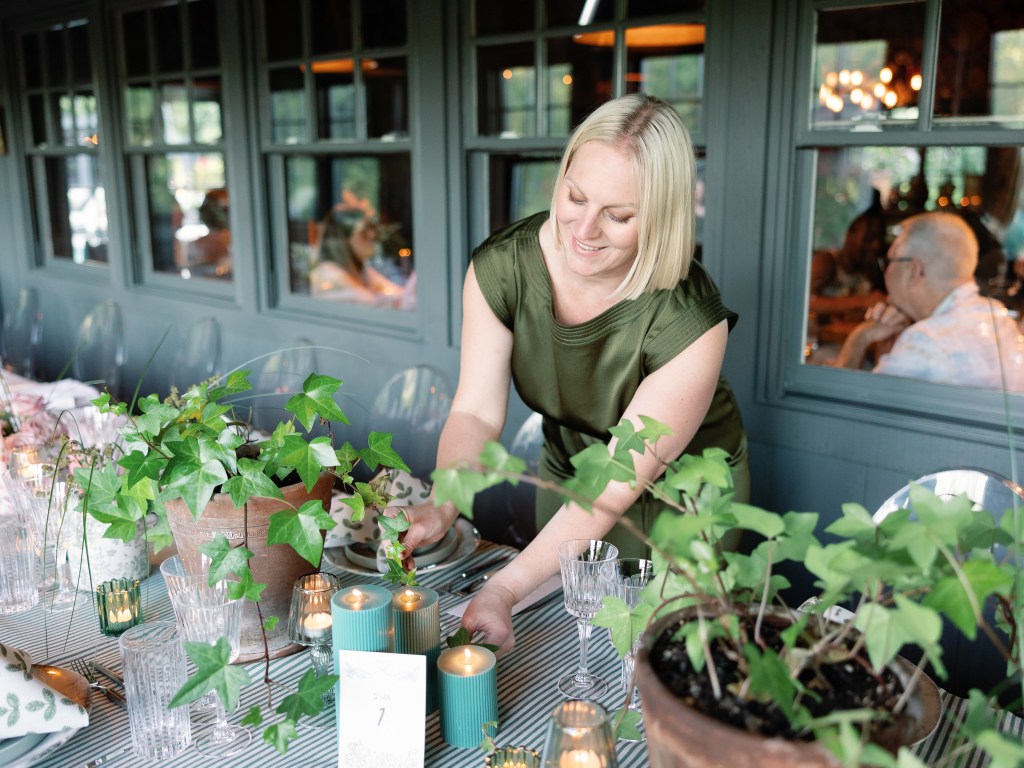
For example, if you’re a planner, think about collaborating with nearby flower farms on organic meadowcore-style arrangements. When asked about keeping things local, Annie said, “I truly believe local is best and we try to avoid flying in vendors, particularly large teams like design, when possible. Also, with PLANNIE, we’re helping clients and planners alike find local event support with our network of local day-of producers so they don’t have to fly in staff from elsewhere.”
Beyond reducing the need for transportation, local sourcing strengthens relationships between small businesses and creates a wedding experience that feels rooted in the community. Local doesn’t automatically mean more sustainable, so consider proximity alongside factors such as cost, availability, quality and how the product is produced.
Small step #3: Get more use out of what you already have
Avoiding single-use items, renting products or repurposing can all be great ways to build sustainability into your business. Here are a few ideas for getting more out of what you own:
- Use rechargeable batteries where appropriate.
- Maintain and repair rental inventory instead of replacing it automatically.
- Create modular signage or decor that can be customized and reused.
- Replace disposable studio or office supplies with reusable alternatives.
- Replace single-use packing or storage materials with durable alternatives.
- Repurpose shipping boxes and packaging when practical.
- Consolidate supply orders to reduce unnecessary packaging and deliveries.
Some reusable items cost more upfront, but they can reduce recurring purchasing costs over time. Review your inventory, and if anything has a short lifespan, consider whether a longer-lasting reusable alternative makes more financial sense.
Small step #4: Make repurposing part of the day-of plan
Don’t be afraid to get creative with your sustainability journey—think ahead so you can repurpose items before they become waste. According to The Knot Worldwide’s 2026 Real Weddings study, couples are already leading the charge, with 28% going for eco-friendly options like using upcycled or secondhand decor, minimizing food waste and avoiding single-use materials.
Plenty of ways exist to adapt your services to meet this demand. If you’re a florist, think about moving the ceremony arrangements to the reception space. Planners can design signage to work well in more than just one location, and use rental decor if single-use is the only other option. If you’re a caterer, try to plan ahead to create menus and food quantities that minimize waste.
Whether you manage a venue or offer day-of coordination, you can build an item’s second use into the wedding timeline, so you’re not scrambling to find ways to repurpose it at the end of the night. Repurposing also benefits your couples by helping them get more out of their purchases while keeping costs low. The easiest way to keep an item out of the waste stream may simply be to plan for its second use before the wedding day begins.
Small step #5: Have a realistic plan for what’s left over
Rather than promising couples you’ll be able to donate leftover materials after the big day, it’s good practice to research ahead of time. You can contact organizations in your area that accept donations, and ask them questions like:
- What’s eligible to be donated, and is there a minimum or maximum?
- When can donations be accepted?
- Who’s responsible for transportation?
- If donating food, what are the food safety requirements, and what can be safely and legally donated?
- If donating flowers, are arrangements accepted as is, or do they need to be broken down or placed into different containers?
You might want to consider making a short list of verified local organizations and their requirements, so your team can reference it and you won’t have to start from scratch after every wedding.
Donation doesn’t have to be the only way to find a new home for leftovers. As part of her planning business model, Annie said, “We do our best to purchase items that the clients can keep, rehome, or donate. I really hate waste and trashing things for one-time use!”
If donation isn’t possible, research other local options such as composting or appropriate recycling. Whatever method you choose, waste diversion works best when it’s part of your planning process—not just an afterthought at the end of the evening.
Small step #6: Look for sustainability wins that can also lower costs
Sometimes eco-friendly changes mean an upfront investment. But often, choosing the more sustainable option can reduce recurring expenses you have, such as:
- Paper and printing
- Disposable office or studio products
- Single-use event supplies
- Packaging and shipping
- Energy use in studios or offices
- Transportation and delivery schedules
- Replacing frequently repurchased items with durable alternatives
Try thinking beyond the purchase price to think about the lifetime cost. For example, if a reusable item costs $50 and replaces a $5 disposable purchase made 20 times a year, making the switch to reusable can save you money and reduce waste. Not every swap is going to automatically lower costs, so focus first on where the environmental and financial benefits overlap.
Share the changes you’re making
There are lots of ways you can communicate the sustainable moves you’re making. Almost two-thirds (65%) of Gen Z and 63% of Millennials—the generations that are getting married most often today—are willing to pay more for eco-friendly products, so they will be interested in hearing about your eco-friendly practices. Share new content on your Storefronts, website and socials, or fill couples in through collateral and during consultations. When sharing, instead of making broad environmental claims, zoom in on the specifics of what you do, like:
- “We source from three local flower farms during their growing season.”
- “Our ceremony arrangements are designed so they can be repurposed at the reception.”
- “We’ve transitioned our client planning process to digital contracts and planning materials.”
Social content is one of the easiest ways to showcase these practices, whether it’s behind-the-scenes footage of decor getting reused or a local sourcing partnership. Gen Z especially is climate-conscious and looks to hire pros that share their values. There’s no need to claim that you’re perfectly sustainable in every area; simply explaining the steps you are taking and the options you offer is a great starting point.
Your World Sustainability Day challenge: Pick two changes
Creating a lengthy to-do list right away can feel overwhelming. Instead, for World Sustainability Day on October 28th, try to choose two changes that are easy to implement:
- Look first for an operational change that can reduce unnecessary purchasing, waste or consumption. This could be transitioning the rest of your paper contracts to digital, or replacing a frequently purchased disposable product with a reusable one.
- For the second change, think about your client-facing actions. How can you make a sustainable option easier for your couples to choose or understand? For example, offer floral repurposing as an option during consultations, or, if you’re a planner, provide a list of verified local rental resources.
See how these sustainable changes work for your business, and go from there!
Let's grow your business together!
Start advertising on The Knot and WeddingWire, the top two wedding planning platforms.
What is new!
- Small Steps, Big Impact: Practical Ways to Build Sustainability into Your Wedding Business
- How Millennial and Gen Z Demand Shapes Sustainability in Weddings
- How to Measure Marketing ROI from The Knot and WeddingWire
- Maximize Your Success: How to Make Your WeddingPro Storefront More Shoppable
- The Knot Worldwide Welcomes Zola to our Family of Brands