How to Calculate Your Advertising Performance Beyond Conversion Rate

How to Calculate Your Advertising Performance Beyond Conversion Rate
Knowing the numbers behind your wedding business—like what it costs you to operate and pay your team, and how many inquiries you need to fill your calendar— can help you make informed decisions about what to do to grow your business, and when.
However, many pros end up focusing on a single metric: conversion rates. And while conversion plays a role in the overall health of your advertising, it isn’t the only signal to track.
“The problem isn’t that they care too much about conversion rate—it’s that they stop there,” said Terrica, a keynote speaker, brand strategist and WeddingPro Educator. “Conversion rate tells you what happened. It doesn’t tell you why, and it definitely doesn’t tell you what to do next.”
Advertising performance is a complete funnel, not a single metric, and the metrics that matter should map to actual business outcomes, like closed sales. Having this broader view of results can lead to smarter business decisions.
What are conversion rates, and how do wedding pros calculate them?
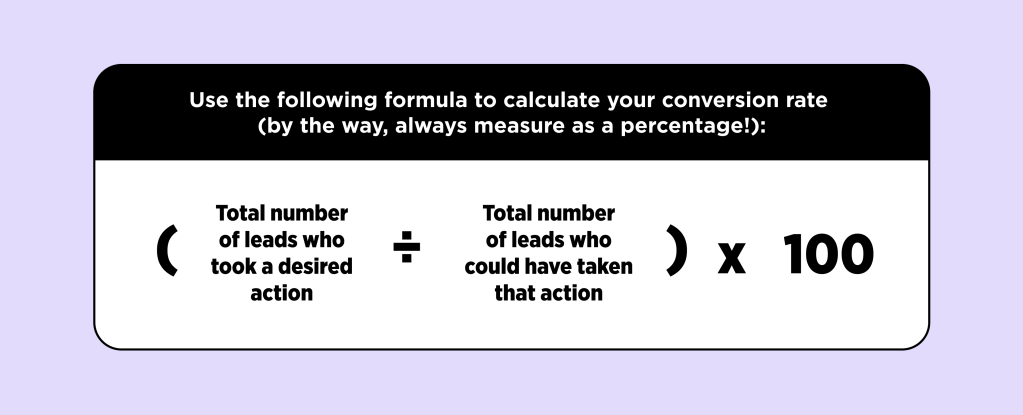
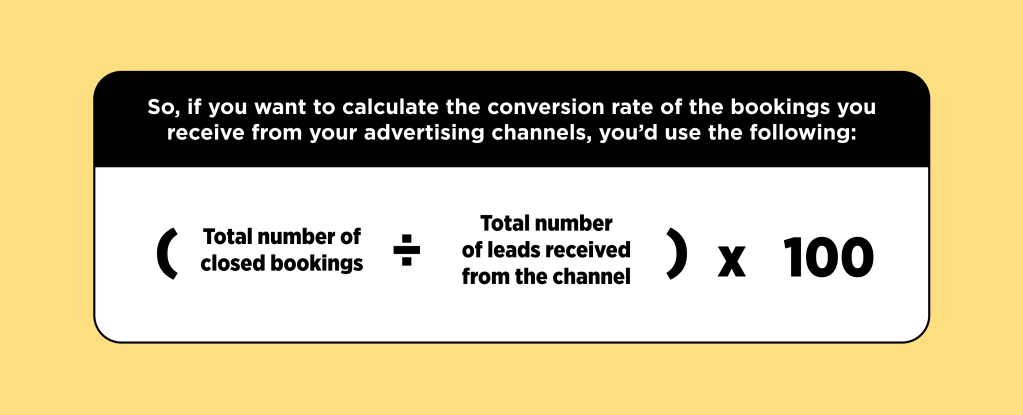
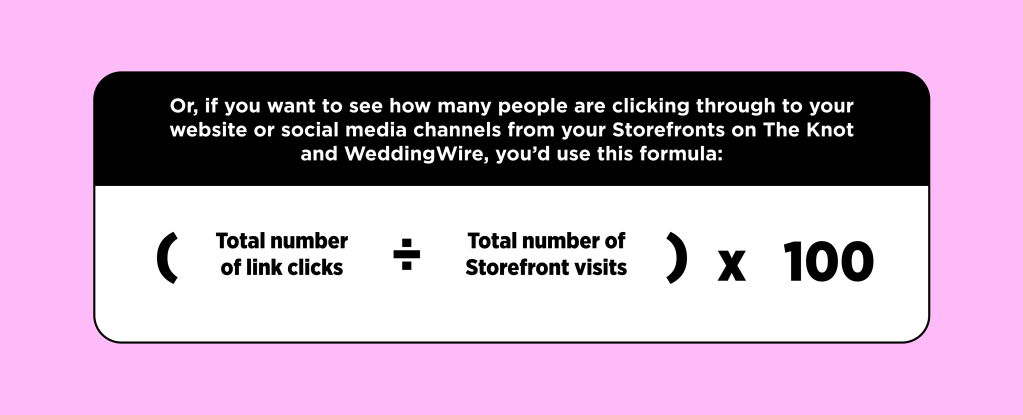
Conversion rates are numerical figures that show how many people actually take a desired action, such as sending a message or filling out a form, compared with how many advertising actions your audience takes. For example, if 100 people visit your Storefront, and 50 people fill out a form to inquire about your services, you’d have a 50% conversion rate.
Measure quality, not just quantity, of wedding leads
The fallacy with conversion rate is that it often rewards the number of inquiries a pro receives but not their quality. But more inquiries don’t always equal better results.
“You narrow your targeting before you chase volume, not after,” Terrica said. “Most pros do it backward. They cast a wider net to get more inquiries, then get frustrated that half of them aren’t a good fit. Get specific about who you want first. The volume follows once the targeting is dialed in, and the leads you do get convert at a higher rate because they were never wrong for you in the first place.”
Instead, Terrica likes to start with lead quality and lead source as a barometer of advertising success.
“First, where did this inquiry actually come from, and does that source consistently send you people who are a fit?” she said. “Second, I have them track the time between stages: inquiry to proposal, proposal to booking and booking to wedding date. That timeline tells you where leads are stalling out and a lot about your sales process, not just your ad spend.”
Lead sources can be any channel where you have an online presence, such as your website, social media or Storefront. To determine if a couple is a fit, you want to ask if they are:
- Within the ideal budget range?
- Aligned with your preferred services or dates?
- Located within your service area?
The more “yes” answers to these questions mark the difference between qualified leads—vetted prospects who actively match your ideal couple profile and show genuine wedding-planning intent—and total leads, which represent everyone who interacts with your business.
From there, you can track the following metrics to gain a better understanding of whether your advertising is netting you the couples you want.
Calculate your booking rate
What it is: How many inquiries become paying clients
Formula: (Bookings ÷ total inquiries) × 100
How it helps pros: Your booking rate can reveal a lot about your sales process and the quality of your leads. As Terrica puts it, “A great ad with a slow follow-up still loses the booking.” The closer you can get your inquiries to your bookings, the better off your business will be.
Understand cost per lead (CPL)
What it is: How much you spend to generate each lead
Formula: Advertising spend ÷ total leads
How it helps pros: CPL helps pros compare performance across various advertising channels—a helpful metric for determining if it’s worth investing more budget in higher-performing lead sources.
Calculate your cost per booking
What it is: Directly connects marketing to revenue
Formula: Advertising spend ÷ total bookings
How it helps pros: Cost per booking often offers a more meaningful business metric than cost per lead. Why? Because leads are vanity, and bookings are revenue, Terrica believes.
“Cost per lead can look great on paper while your close rate quietly falls apart, and you’d never know it just by watching that one number,” she said. “Cost per booking forces you to look at the whole picture: your ads, your response time, your sales process, all of it. It’s the number that actually tells you if the advertising is working for your business, not just your inbox.”
Track return on investment (ROI)
What it is: Looks beyond leads to the actual revenue generated
Formula: ((Revenue generated – advertising cost) ÷ advertising cost) × 100
How it helps pros: ROI can dictate where to invest future budget
Evaluate response time performance
What it is: How quickly you respond to an inquiry
Formula: Average response time or percentage of leads responded to
How it helps pros: Speed matters in wedding lead conversion
Benchmark your performance over time
Knowing all of the above metrics does little good if pros aren’t tracking them at the right cadence and optimizing their advertising strategy from there. Terrica breaks down a schedule she recommends:
- Weekly: Ad spend and leads generated, “just to know the machine is running.”
- Monthly: Cost per booking. “This is the number that tells you if the spend is actually paying off.”
- Quarterly: Lifetime value and overall ROI. “This is where you zoom out and ask if the whole strategy is working, not just the campaign.”
There are industry averages for all these advertising metrics, but Terrica advises pros to set their own benchmarks before comparing themselves to those averages.
“Know your average sale value and your break-even cost per booking,” she said. “Once you know that number, you know exactly what you can afford to spend to acquire a client and still be profitable. That’s a far more useful benchmark than whatever number someone else is throwing around online.”
It’s also imperative to track the full couple advertising journey, not just the click.
“Your ad’s job is to get someone into your world; your sales process’s job is to get them to book,” Terrica said. “If you’re only measuring the ad, you’re only seeing half the story, and you’ll spend money trying to fix a problem that isn’t actually in your ads.”
Final thoughts
An important last piece of advice Terrica shares is that advertising performance isn’t just an advertising or sales thing in isolation—they’re connected.
“Pros need to look at the whole system, not just the piece that’s easiest to measure,” she said—which is why, ultimately, conversion rate is one piece, not the whole picture, of advertising health.
Let's grow your business together!
Start advertising on The Knot and WeddingWire, the top two wedding planning platforms.
What is new!
- The Storefront Makeover: 10 Small Changes That Could Make a Big Difference
- How Wedding Vendors Can Turn Leads Into Bookings on The Knot and WeddingWire
- 7 Ways to Promote Your Award Win—With Examples from Pros
- What Couples Look for in Reviews on The Knot and WeddingWire
- Your Top Questions (and Answers!) About Reviews