Navigating a New Era: Venue Insights from The Knot’s 2026 Real Weddings Study
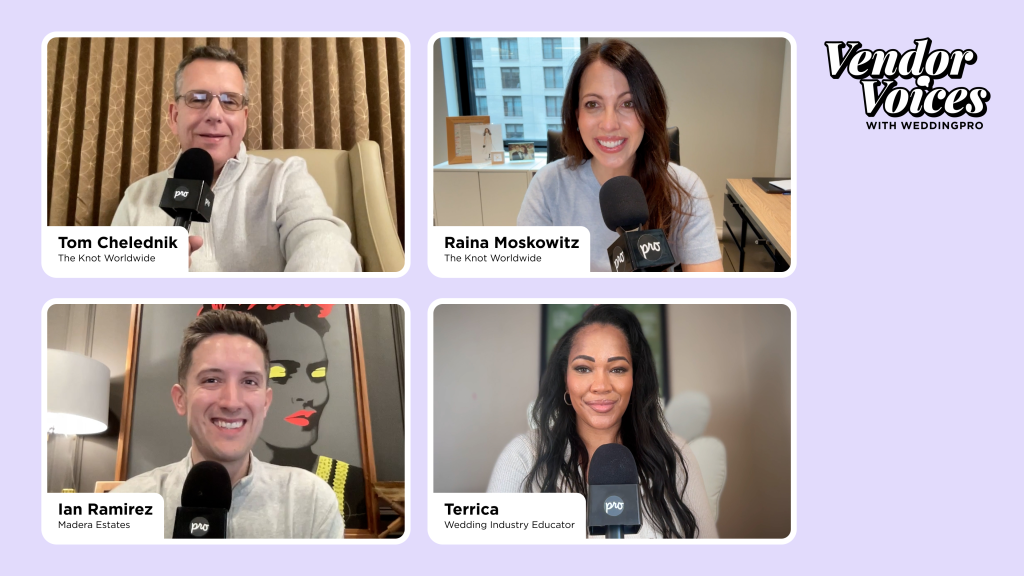
The results of The Knot Real Weddings Study 2026 are in, and they paint a picture of a $100 billion dollar industry that’s remarkably resilient and vibrant. While weddings remain a non-negotiable life milestone, the way couples plan has evolved: cookie-cutter traditions are taking a backseat to authentic, hyper-personalized celebrations that reflect the couple.
“When you connect their needs and wants to your value and your products and services, it’s a win for everybody.”
Terrica, Speaker and Founder of Cocktails & Details
This year’s data reveals a “K-shaped” split in spending, an increase in the number of venues couples are reaching out to, and a rapid rise in AI adoption; three signals that offer a massive opportunity for vendors to sharpen their strategies and connect with couples on a deeper level.
Register for the full vodcast.
The state of the union
Weddings continue to prove their resilience as non-negotiable life milestones. In 2025, about 2 million U.S. couples said “I do,” contributing to over $100 billion in total wedding-related spending. Despite economic shifts, key indicators show a stable market that continues to center celebrations:
- Average Guest Size: 117
- Average Vendors Hired: 13
- Average Engagement Length: 14 months
- Average Venue Spend: $12,900
- Typical Venue Spend Range: $3,500 – $24,800+
For most couples, the journey begins with the space; 83% of couples said venues took priority when assembling their vendor team, and 89% of all 2025 weddings officially secured a professional venue.
Competition and the time-to-value shift
Securing leads in 2026 requires more patience and persistence than ever before. Competition for the “Yes” has intensified as couples cast a wider net. On average, couples now reach out to six venues before making a decision. This represents a 100% increase from the three inquiries seen in previous years.
Once a couple is through the door, the data suggests that slowing down is the key to closing. Ian has found that his conversion rates increased significantly as his tour lengths increased to accommodate the modern couple’s need for deeper connection.
“We started our venue in 2012 and our tours then were maybe about an hour long. Today, our tours are at least two hours long. And for me, our conversion rates, the way that it’s changed from 20% now to over 50%… it really comes down to this idea of time. Today’s generation really needs time to be able to understand the value of your services .”
Ian Jose Ramirez, Venue Coach and co-owner of Madera Estates
The “k-shaped” spending split
The 2025 landscape was defined by a “K-shaped” divergence in spending, where couples are navigating the economic climate through two distinct paths:
- The Guest Experience Path: Couples spending over $41,000 are prioritizing guest experience (77%). They host larger celebrations averaging 141 guests at full-service venues like historical buildings and country clubs, often with family contributions covering roughly 62% of the costs.
- The Pragmatic Path: Couples spending under $12,000 are primarily driven by cost (77%). These couples opt for smaller gatherings (averaging 92 guests) in non-traditional venues like parks or family homes, relying heavily on DIY decor (44%) and friend officiants (67%) to keep their self-funded celebrations affordable.
To see how different wedding paths look in practice, consider these three distinct snapshots of 2025 weddings.
Anatomy of a wedding
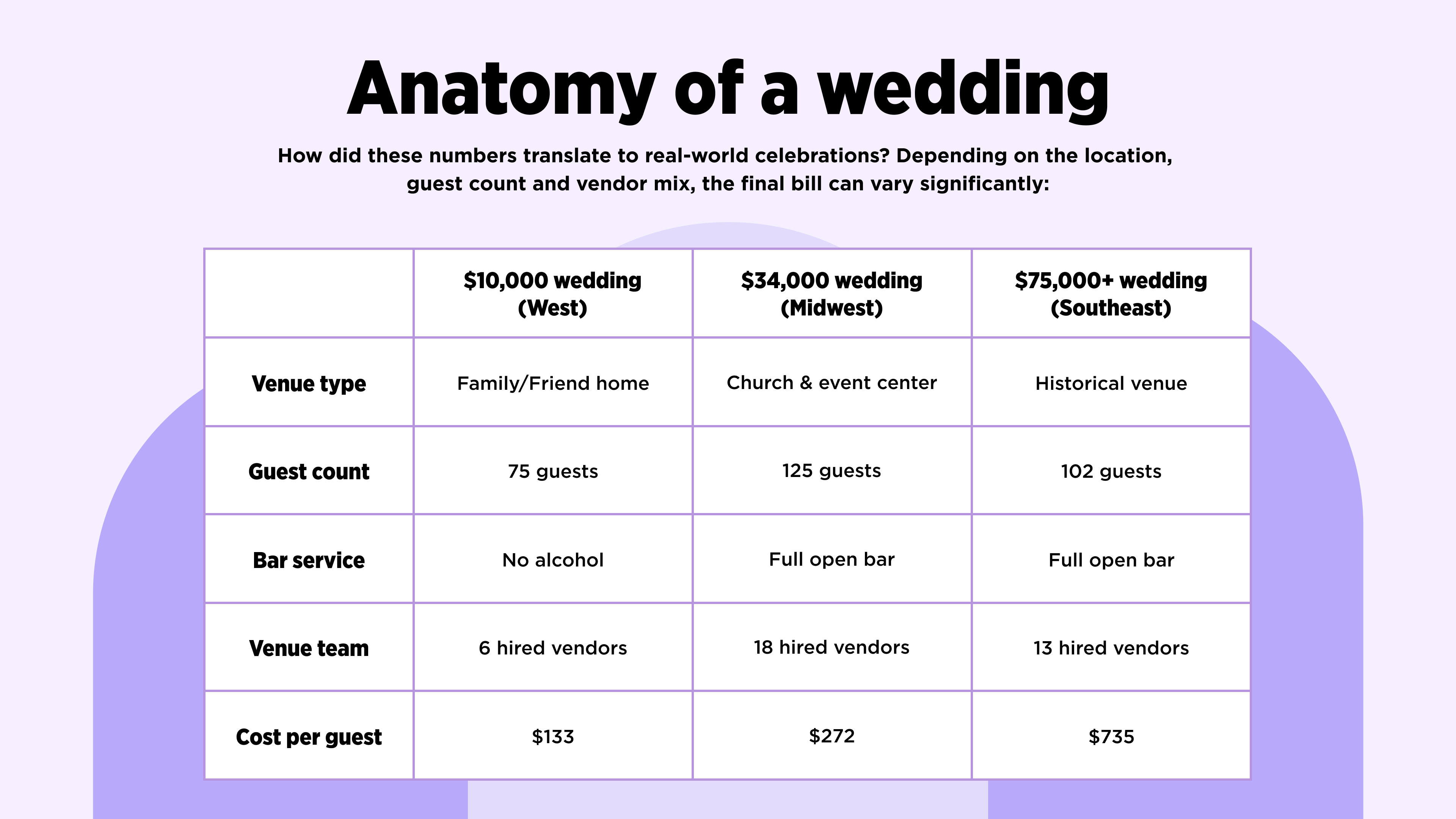
Pro Takeaway: Focus on connecting better rather than just doing more. Whether your clients are planning a $10k backyard bash or a $100k gala, they’re looking for vendors who understand their specific financial comfort zone and the hierarchy of needs.
Working smarter with AI
The AI era of wedding planning isn’t coming, it’s already here. Adoption among engaged couples jumped from 20% to 36% in just one year. As AI shows up in new ways around the industry, we expect adoption to continue.
How couples use AI
While AI is becoming a staple in the wedding planning toolkit, it isn’t replacing the need for human connection. Instead, couples are turning to AI as a digital sounding board to navigate the early, often overwhelming stages of the planning journey before they ever reach out to a vendor.
For vendors, this means couples are showing up with a better defined vision and clearly articulated needs, thanks to three primary use cases:
- Inspiration and Advice: 60% of couples use AI to spark creative ideas, bounce around vision concepts and answer early-stage etiquette questions.
- Logistics and Timelines: 46% use AI for functional tasks like drafting preliminary timelines and managing planning logistics.
- Drafting Communications: It’s become a go-to resource for writing website copy, drafting communications to guests and even assisting with wedding vows—an area where nearly 50% of Gen Xers are already leading the way.
Pro Takeaway: Don’t view AI as a competitor for your expertise. View it as a pre-filter that helps couples find their footing. When you see a couple with a perfectly drafted timeline or a clear aesthetic, they may have started that journey with AI but they’re looking for you to help validate those ideas and bring the final vision to life.
How wedding pros use AI
While couples use AI to find their footing, wedding pros are using it to scale their expertise and reclaim their time. Though some pros are still getting comfortable with the tech, industry leaders are already treating AI as a strategic partner to handle the burden of business operations.
“I use it for everything…literally everything. I’ve named my GPT. Yeah, it’s a whole thing.”
Terrica, Speaker and Founder of Cocktails & Details
Terrica treats ChatGPT as her “AI twin,” using it to build out overarching content calendars and pillars rather than the exact content itself. By adding her ideal couple profile into the AI, she generates content ideas that resonate specifically with her target audience. She even uses it for visual design support, to aid in creating mockups for long-distance clients who can’t visit in person.
Pro Takeaway: Use AI to handle the admin and first drafts so you can stay focused on the creative, human side of your business.
Decoding 2026 couples: Gen Z and Millennials
Gen Z now represents 41% of the wedding market, and they’re redefining celebrations through a lens of authenticity and personal expression. While they value intention, their spending and planning behaviors differ significantly from their Millennial counterparts.
For example, Gen Z is hosting larger celebrations with an average guest count of 129, vs. the 112 average for Millennials. This larger scale is often possible because Gen Z weddings remain primarily supported by parents and family, whereas Millennials are spending about 15% more than Gen Z as they take on more of the financial responsibility themselves.
These financial dynamics also influence how they build their dream teams. Because Millennials are often self-funding any premium services, they’re nearly twice as likely to invest in professional guidance, with 39% of millennials hiring a wedding planner compared to just 20% of Gen Z couples.
“Today’s couple wants to feel smart about their financial investment on their wedding day.”
Ian Jose Ramirez, Venue Coach and co-owner of Madera Estates
Pro Tip: Gen X still makes up 7% of marrying couples—7% of a $100 billion industry is a huge opportunity for pros! Don’t be afraid to find your niche.
The pricing reality check
“When you can explain to them not only just the price, but why it matters to the story, to the guest experience, to the overall benefit of the day, that’s when it’s no longer about price. Price is only an issue in the absence of value.”
Terrica, Speaker and Founder, Cocktails & Details
In 2025, 52% of couples reported that their initial budget was lower than the actual reality of their spend. While they may not understand the cost of weddings before they get started, this shows that education is critical to helping couples see the value of your work, and what goes into the price. When you do that, couples are more likely than not to increase their budget.
Terrica suggests a psychological pivot: stop using the word “budget” initially. Instead, ask about something like their “financial comfort zone.” This allows you to understand their hierarchy of needs without causing “sticker shock” or putting couples into a defensive position.
Ian has found that price transparency is a massive differentiator. By posting real wedding budget breakdowns on social media, and starting points on his Storefront, he found that high-intent leads were actually more likely to reach out because they felt educated, empowered and prepared.
Pro Takeaway: Practice “price transparency” to build immediate trust and filter for high-intent couples who align with your financial requirements.
Creating unforgettable guest experiences
Venues are no longer one-day hosts. With 71% of celebrations spanning 2-3 days, there’s massive potential for venues to capture the 75% of couples hosting rehearsal dinners and the 26% planning welcome drinks.
Guest experience is now the #1 priority for 69% of couples. To achieve this, couples are favoring a “semi-formal” style (60%) that prioritizes comfort and mingling over rigid traditions. Authenticity is the goal.
They’re also sweetening the day with more interactive experiences. For example, 53% of couples added a dessert bar and many are opting for “experiential” moments like live tattoo artists or painters.
Tom suggests using the topic of guest experience as a lead magnet. Offer a high-value guide (like a “Top 5 Guest Experiences” doc) on your website to capture emails and show expertise before they even book.
Pro Takeaway: Always ask “How do you want your guests to feel?” during your intake or discovery conversations—then use the couple’s own words to justify your recommendations.
The bottom line: Turn hard data into human connection
“There’s so much data from the Real Weddings Study… important data, but most importantly, how do you use this data to connect with the couples in your market?”
Tom Chelednik, Vendor Community Director, WeddingPro
While it’s easy to get lost in the spreadsheets, the 2026 Real Weddings Study boils down to a singular truth: the wedding industry is a resilient, $100 billion industry that remains deeply rooted in human connection. The data tells us that while the “cookie-cutter” wedding is fading, the desire for a non-negotiable life milestone is standing strong.
Pro-Takeaway: As the first vendor booked, the venue sets the tone for the entire vendor team. Use that advantageous position to educate the couple on costs and guide them toward a financial comfort zone that sustains their vision.
To move your business forward in 2026, consider these action items.
- Market the “Why,” Not the “What”: Stop selling bullet points of amenities. As Ian Ramirez emphasizes, today’s couples are “value seekers” who want to feel smart about their investment. Shift your marketing to benefit-driven language that highlights the emotional experience only you can provide.
- Navigate the “K-Shaped” Reality: Recognize that the market has somewhat split. Whether you’re catering to the couple focused on guest experience or the couple focused on pragmatism, authenticity and understanding are the common threads they both crave.
- Price is a Proxy for Value: Remember Terrica’s golden rule: “Price is only an issue in the absence of value.” Use price transparency not just as a filter, but as a tool to build immediate trust and differentiate yourself in a crowded market.
- Balance the High-Tech with the High-Touch: AI is here to handle the cognitive load, but it cannot replace the chemistry that couples crave. Use technology to reclaim your time so you can focus on the human connections that actually close the sale.
Ready for the full deep dive? Get the full 2026 The Knot Real Weddings Study for a deeper look at the raw data.
Let's grow your business together!
Start advertising on The Knot and WeddingWire, the top two wedding planning platforms.